
Make Developer’s Life Easy
Reduces burden of boilerplate coding and manual wireframing. Translates business requirements into clear technical specifications and generates production ready code for devs.
LensHub Analyzes Existing Code, Generates Smart Documentation, Creates Precise Requirements, Automates Wireframes, and Generates Production Ready Code Instantly.

Buy LensHub now and get a 50% one-time discount for evaluating one application.
Reduces burden of boilerplate coding and manual wireframing. Translates business requirements into clear technical specifications and generates production ready code for devs.
Visual representation of project scope aide’s product owners in proposing features and functionalities. AI driven code generation helps with rapid iterations and timely releases.
Faster time to market with high ROI and reduced modernization risk. Data driven decisions for future proof products and solutions. Fostering trust among investors and stakeholders.
LensHub Factors
Automated Code Analysis: LensHub uses AI powered suit to scan your codebase, highlighting potential issues like security vulnerabilities, code health, and inefficiencies.
Smart Documentation Generation: LensHub dynamically generates comprehensive documentation based on your actual codebase, explaining functionalities, relationships, and best practices.
Code Dependency View: LensHub creates clear, visual maps of your code's dependencies, showing how different modules and functions interact. This makes it easier to understand the impact of changes, anticipate potential regressions, and plan refactoring efforts efficiently.

Micro-Level Requirement Classification: LensHub facilitates crystal clear micro-level requirement classification for both business and technical teams. By offering a detailed breakdown of requirements, it ensures a precise understanding at a granular level.
Mock-it Before You Code It Approach: LensHub empowers teams to visualize UI and API designs prior to coding, promoting active collaboration and early identification of potential snags. It expedites development and leads to time and cost savings.
Intelligent Wireframe: LensHub proactively analyzes requirements, automatically extracting vital elements for wireframe creation. Seamlessly identifies input fields, user events, validations, and other key components, accelerating the wireframing process.

AI-Driven Code Generation: LensHub leverages its clear understanding of requirements and wireframes to automatically generate production-ready code. The AI-driven code generation ensures adherence to best practices, standardized and maintainable codebase right from the outset.
Technology Choice Freedom: LensHub isn't locked into a specific tech stack. You can choose the framework and programming language that best suits your project, and LensHub will tailor the code accordingly.
Simplified Application Modernization Journey: LensHub simplifies the process of migrating or onboarding onto new platforms. By generating code that aligns with the target technology, it facilitates a seamless transition. Helps businesses modernize their applications efficiently, without extensive redevelopment.

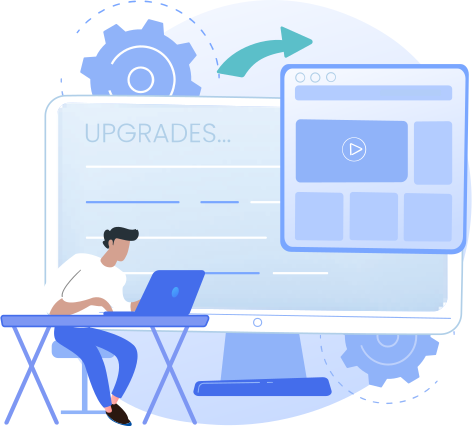
Empowers your journey into modernization by supporting over 10 legacy programming languages like ASP.NET, PHP, Angular, and Java. Seamlessly handles transitions from both older systems and recent technologies.
LensHub provides contextual chat, approval process, track requests, task management and release planning making it an effective collaboration solution for teams.


LensHub supports the generation and management of diverse test data sets, acceptance criteria and facilitate thorough testing.
LensHub fits every software project. Decide if you want to run LensHub on your own servers, or use our SaaS solution.
Activate your free trial and see what LensHub can do for you. Getting started is easy.
The rapid rise of Robotic Process Automation (RPA) and Artificial Intelligence (AI) in recent years has led to their widespread adoption for automating routine tasks by organizations worldwide. However, to achieve intelligent automation or hyperautomation, RPA must be combined with AI to enable human-like decision-making capabilities. Hyperautomation tools can transform business processes by making cognitive, data-driven decisions, which is why Gartner has identified hyperautomation as the top strategic technology trend of 2020.
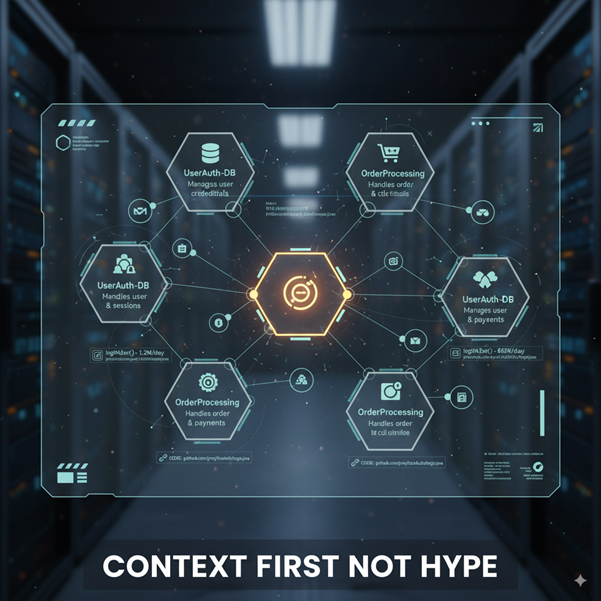
Discover how Generative AI transforms legacy system modernization beyond simple chatbot implementations. While most organizations focus on GenAI for customer-facing chatbots, the real transformation potential lies in applying these technologies to legacy system modernization and technical debt reduction.
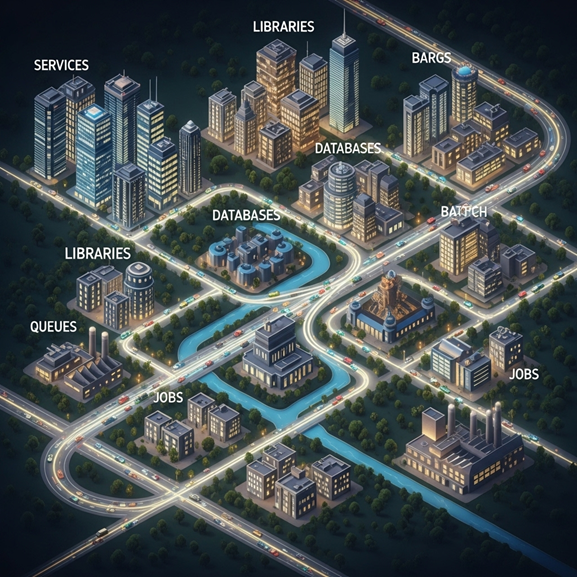
Rapidly understand complex legacy systems using AI-powered analysis and visualization tools. Understanding decades-old legacy systems traditionally takes months of manual analysis. With modern AI-powered tools and systematic approaches, you can create comprehensive system maps in hours rather than months.